Wheelchairs Stand at Attention

Malawi Healthcare, Wheelchairs, Medical, Medical Shipments & Distribution

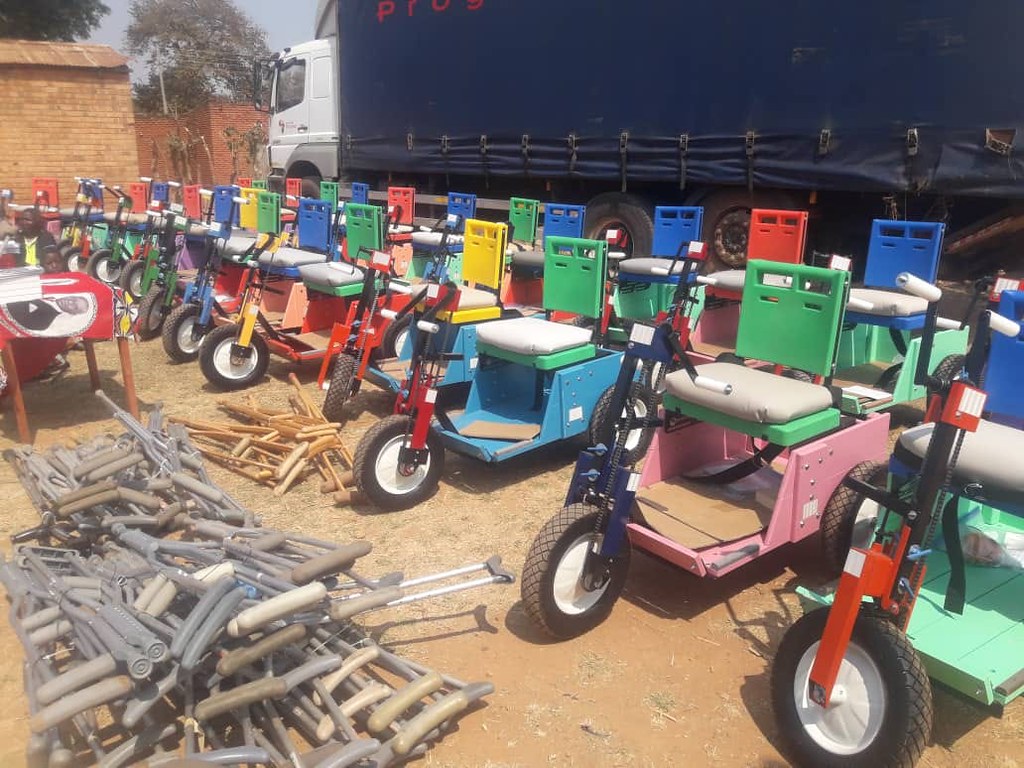
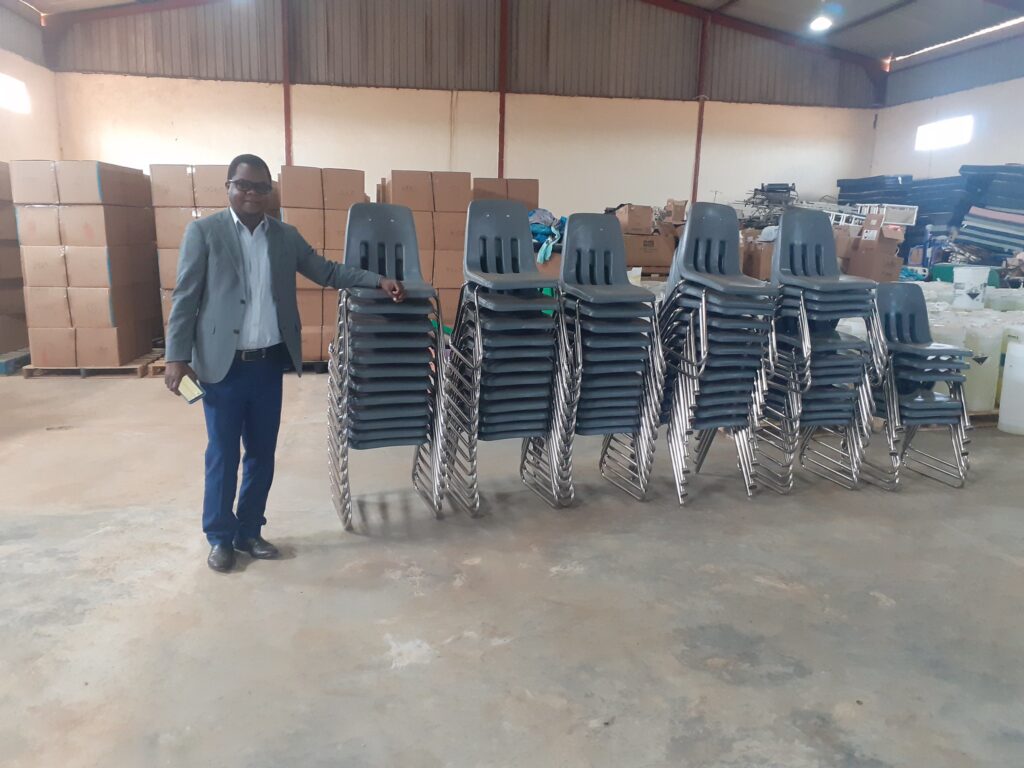
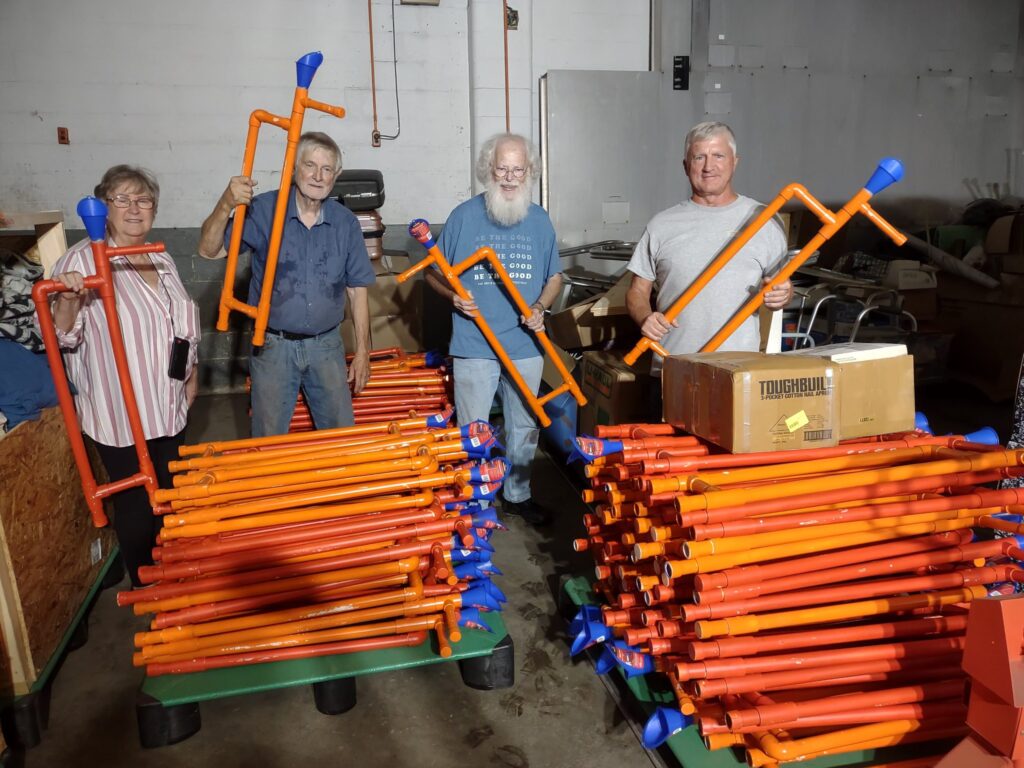
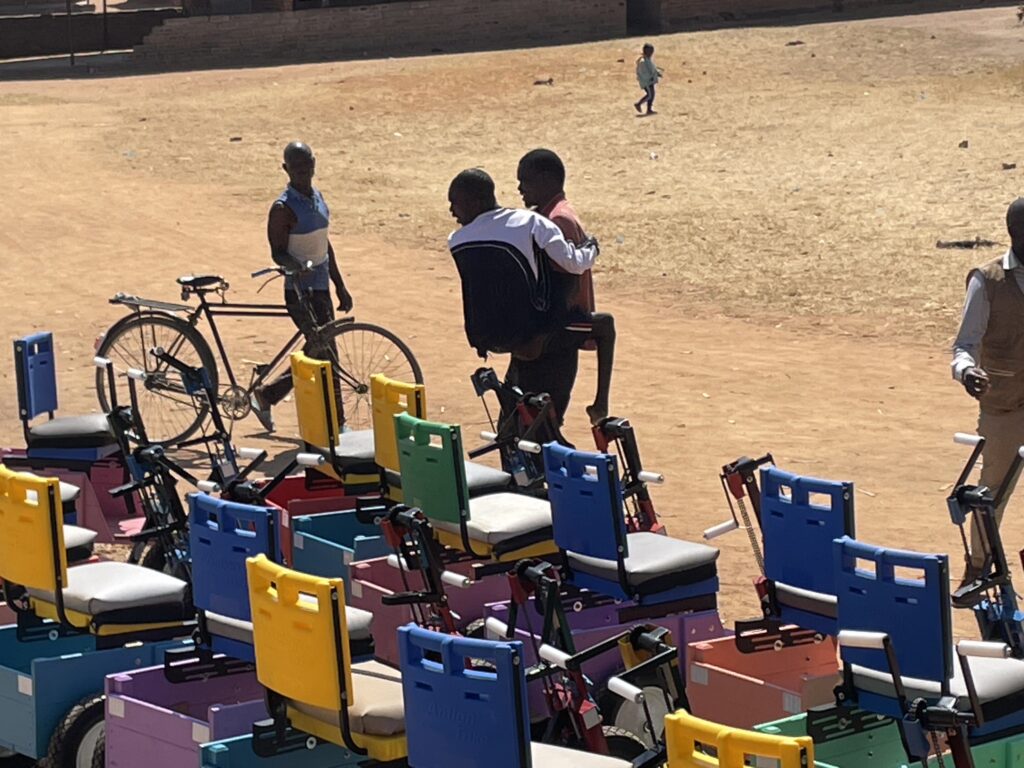
     Indianapolis, Indiana … As the Director for the Malawi Project prepares to take the picture Richard Stephens sights into the camera lens and notes how it appeares "the wheelchairs look like they are standing at attention." He and the Medical Director for the Malawi Project, Suzi Stephens are making an appraisal of supplies that will soon be making their way to the Kachere Orthopedic Rehabilitation Hospital in Blantyre, Malawi. Among the supplies that will fill a 40-foot semi trailer are a large number of wheelchairs that are sorely needed in Malawi, the third poorest nation on earth.

    Stephens notes, "This shipment will be the second shipment to Kachere in the past three months. The orthopedic hospital is in turn are making some of the supplies available to Queen Elizabeth Hospital, the largest in the southern region of Malawi, the Bangwe Weaving Factory, a companion facility that is assisting the handicapped and also in Blantyre, and the Naminkango Maternity Hospital in Thondwe, a small trading center just east of the commercial center of Blantyre." Stephens concludes, "We are pleased with the new relationship that is developing between the Malawi Project and the medical facilities in the area around Blantyre. It is fitting very well into our plans that are designed to expand aid throughout the nation of Malawi. We owe a note of appreciation to Mama Cecelia Kadzamira who has helped to bring these contacts into a working relationship to the benefit of the people of Malawi."

Orthopedic Hospital Praises Supply Shipment

Malawi Healthcare, Medical, Medical Shipments & Distribution

Forty Foot Container Arrives at Kachere
    "It is really a help," notes Mrs. Nthewere one of the nurses at the Kachere Rehabilitation Centre near the south side of Blantyre, Malawi "So many of the patients are very needy and the soap, toothpastes and clothes will see them through. In addition the beds we had were in bad need of repair. Some of the patients, especially the quadriplegics (patients who have lost control of both arms and legs) found it hard to change positions.  The coming of the new adjustable beds in this shipment brings a big change to these patients."  Mrs. Nthewere was referring to a recent shipment of medical supplies that reached the handicap facility from the Malawi Project.

    One beneficiary Edwin Matenda, a 23-year-old patient whose arms, trunk, and legs were paralyzed following a fall from height over 2 months ago, also echoed the advantages of the adjustable beds. "I can now ask somebody to adjust it for me so I can be brought to a sitting position.  I can breathe better and eat well when I am sitting.  Life was difficult on the previous bed.  Thanks for the change", Edwin says.

    "I often fed him in lying position because I couldn’t support his weight in sitting while feeding," said her widowed mother who is his guardian at the institution.  ‘This often led to serious choking.  But this bed has changed everything.  He is fed nicely and it’s lively talking to him in a sitting position." said the smiling mother. "For the clothes, at first it was difficult when he soiled a pair of clothes he had before.  He would have only a bed sheet while the only set of clothes were being dried.  Now I can change his clothes comfortably", said the mother. "Being a widow and caring for him full time at the rehabilitation centre life is difficult.  It is not easy to even get the basic needs. ‘Thank God’, soap, toothpaste and the rest of the things that we have received will help us," said the mother.

    According to G. Chimatiro, the Administrator of the center, "Treating patients with so many needs that we cannot meet is always tough. The trailer of supplies that have been donated came at the right time."
   
    Contributors who assisted the Malawi Project in getting the supplies to Malawi made the 40-foot trailer of orthopedic and medical supplies possible. The shipment left the United States in October and arrived in Malawi in late January.


The Pot of Boiling Water Tips Over On Him

Malawi Healthcare, Medical, Medical Shipments & Distribution, About Malawi

The Cooking Fires Burn Close to the Houses

    Those early morning hours will remain unforgettable in Mackson’s life. As always he went to play in the neighborhood with the other children. But this day would not be like other days and unfortunately he was caught up in an accident when a pot of boiling water tipped over his back and splashed onto his left upper back. The burns were severe. Burns such as this take the lives of many children in Malawi as they fall around the cooking pots that stand unguarded around most of the houses. At four years of age little Mackson Kapeni would not have known the full extent of the danger until it was too late.

    Immediately someone called for the mother and she rushed the boy to a nearby health center where he was evaluated, but they did not have any supplies with which to assist him. He was then transferred to Bwaila Hospital - (Formerly called Bottom Hospital). This is a major medical center in the capital, but as with most hospitals in Malawi they are often short of supplies. On this day it was as it is so often and there was very little that could be done at this center due to lack of medicines.

    The mother was directed to the Sacred Promise Clinic where we had medicines because of supplies given to us by the Malawi Project. We quickly attended to the burns and were able to send him home. He continues to return on an out patient basis.

     The prognosis is good and we anticipate a speedy recovery. Our thanks go to all of those who help to support the Malawi Project and its work in our country.        

Dr. Smith Chibaka                                                                                                                                                                                                                

Run Over Like A Pitiful Animal

Wheelchairs, Medical Shipments & Distribution, Be The Change, About Malawi

Car Could Not Stop as Mavuto Crossed the Road

    Mavuto Chifumbi lives in Makwani Village in the area of Traditional Tribal Authority Chief Mponela in the Dowa District of central Malawi, Africa. He is not sure about his age, but is probably in his early fifties.

    Mavuto was born with both legs, and was able to walk until 1972. On the dreadful morning of 18th April 1972, Mavuto was crossing the road at the Mponela Trading Centre. A speeding car was approaching from the north. Unfortunately for Mavuto as he was trying to cross the road he stumbled and fell to the ground on the highway. The driver could not stop and he ran over Mavuto’s legs. From this accident he lost the use of both of his legs. From that moment onward Mavuto was destined to crawl on the ground like some sort of pitiful animal.

    At home Mavuto has a wife and five children. Two girls and three boys must help their father everywhere he goes. But today Mavuto it is different for him after his trip to Blessings Hospital. He smiles as he says,

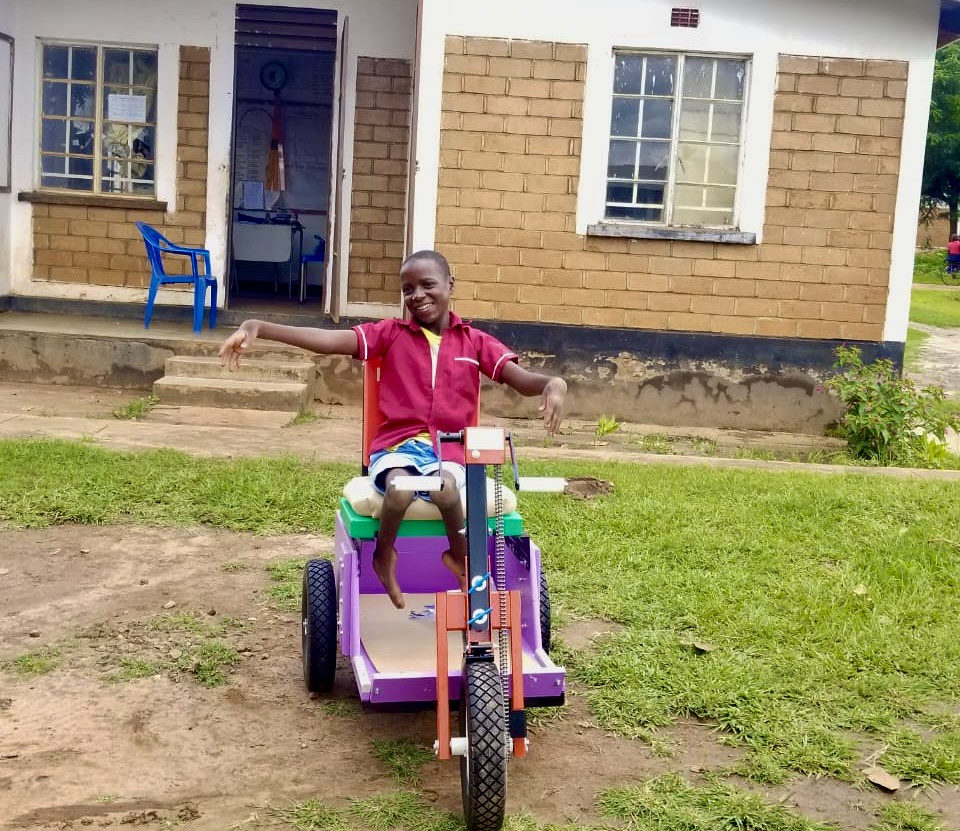
"Today is a relief day in my life. For the past world I have been crawling like this." Mavuto demonstrates by crawling towards the wheelchair. "I wish to inform the world that today I will stop crawling and will use this wheelchair. God is the only one who can understand my happiness that is inside me. I know it is very difficult for people to know, for they cannot see my happiness that is inside me. This wheelchair will support my family and me, I will now be able to move freely without someone taking me on his or her back when either going to Church or to the market. May God bless all the people that put their money together to get this wheelchair for me. I have a small business. I am a cobbler. I do fix people’s shoes, and I will use this wheelchair when going to the market to assist the people in my community."

 Editors Note: the Malawi Project is currenlty making plans to work with the Free Wheelchair Mission to send another shipment of over 500 wheechairs to Malawi in 2008.

They Kill Before You Know They Are There

Malawi Healthcare, Medical, Medical Shipments & Distribution

They Are Very Small, and Very Deadly

    You may not get a correct picture of how terrible a mosquito can be until you get bitten by an infected mosquito and go through a process of having a malaria attack. Lack of immediate help may lead you to a premature death. It is unfortunate that these tiny creatures have evolved into becoming resistant to a number of anti-malaria drugs. This has led to difficulties in getting cured of malaria, in countries like Malawi.

    On the morning of 5th February 2008, I got to my clinic only to find a Mr. and Mrs. Milanzi, waiting for me next to the entrance to the clinic. The woman looked dehydrated and in great pain. As I helped the poor woman into the clinic, I felt the heat emanating from her   body and the pathetic look of her face. I could tell without getting into all the routines that this was another malaria case. The disease has killed more people than those who have succumbed to HIV.

Temperature Reaches 104

 Mrs. Milanzi had lost a lot of fluids through vomiting. She had been vomiting since midnight, the husband told me. I placed a thermometer, which registered a temperature of 104 degrees F.

 I admitted the patient to our observation room. We opened an intravenous line and started administering fluids while waiting for a laboratory confirmation of malaria. The results indicated she should be classified as a P. Falciparum 3+, the most serious form of malaria.  We continued with intravenous quinine administration.

    The patient required more observation time than we could afford. We wish she had remained within our premises for an additional observation time.  Unfortunately our facilities are limited and could only keep her until knock off time.

    At  1700, we had to send Mrs. Milanzi home, though not fully recovered.  However, we had done the best we could in getting her out of the danger zone and kept our fingers crossed that her condition should not suddenly change for the worse.

    Malaria can be worse especially when all the necessary undertakings have not been adequately done. The vomiting and episodes of diarrhea often leave a patient very dehydrated. Temperature spikes leading to convulsions sometimes complicate the situation.

    A medical attendant is usually caught up in a dilemma of whether to send a patient home or observe him or her until one has fully recovered and walk home without any support. That is an ideal set up. Nevertheless, we are working towards there and one day we will be comfortable to keep patients, like Mrs. Milanzi, at our premises until they are fully recovered.

    Above everything, we need to point out that we had the confidence of handling this case because of the availability of some medical consumables we benefited from Malawi Project. 

    There are many people who share the same joy today because of a helping hand from the Malawi Project. We wish the Lord’s blessings over the Malawi Project Team.

By Dr. Smith Chibaka, Sacred Care Clinic