A 17 Year Old Riding On His Mother’s Back

People of Malawi, Malawi Healthcare, Wheelchairs, Medical, Be The Change, About Malawi

One Can Little Imagine the Scene

    One can little imagine what it must be like for a mother to spend 17 years of her life carrying her child on her back everywhere she goes. Yet this is what happened to Afilo Mkwapatira’s mother. Afilo is 17 years old and comes from the Kuiza Village in the Dedza District * of central Malawi. He and his mother live within the jurisdiction of tribal chief Tambalo. Afilo has never been able to move about by himself, nor has he ever been able to speak.

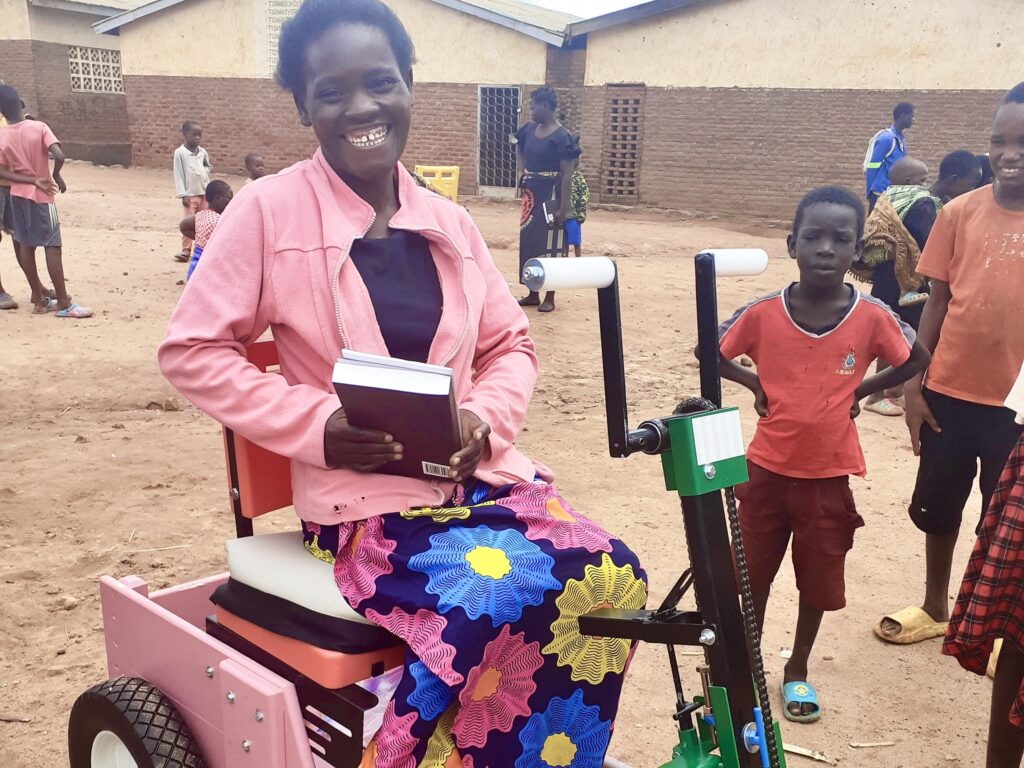
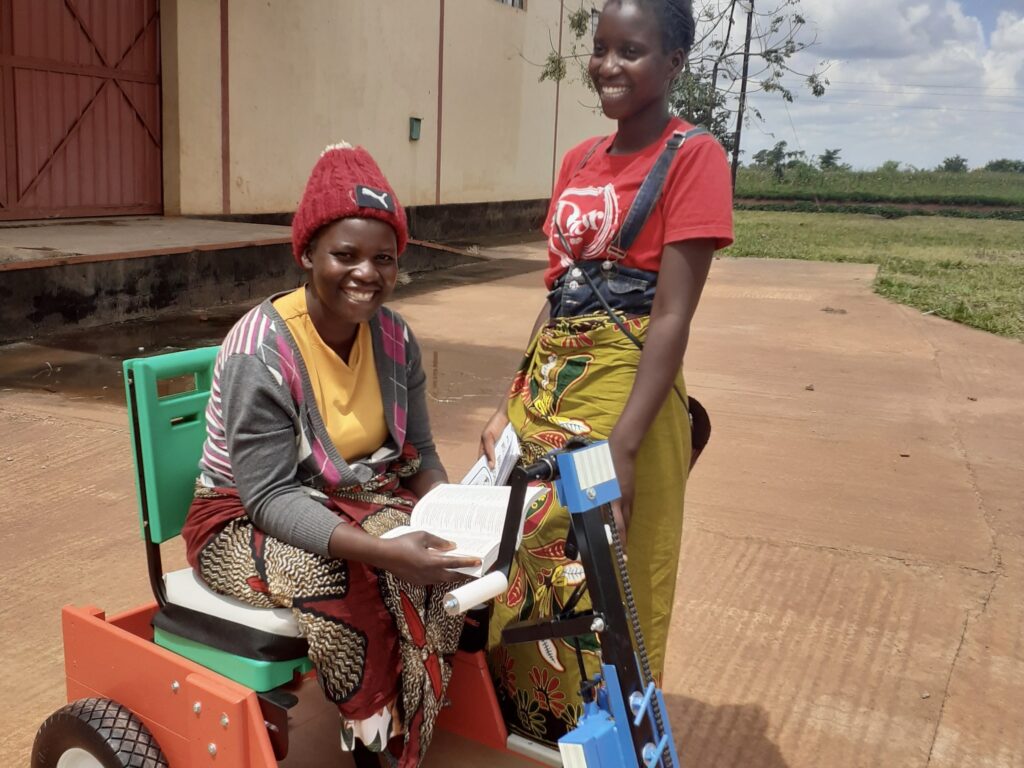
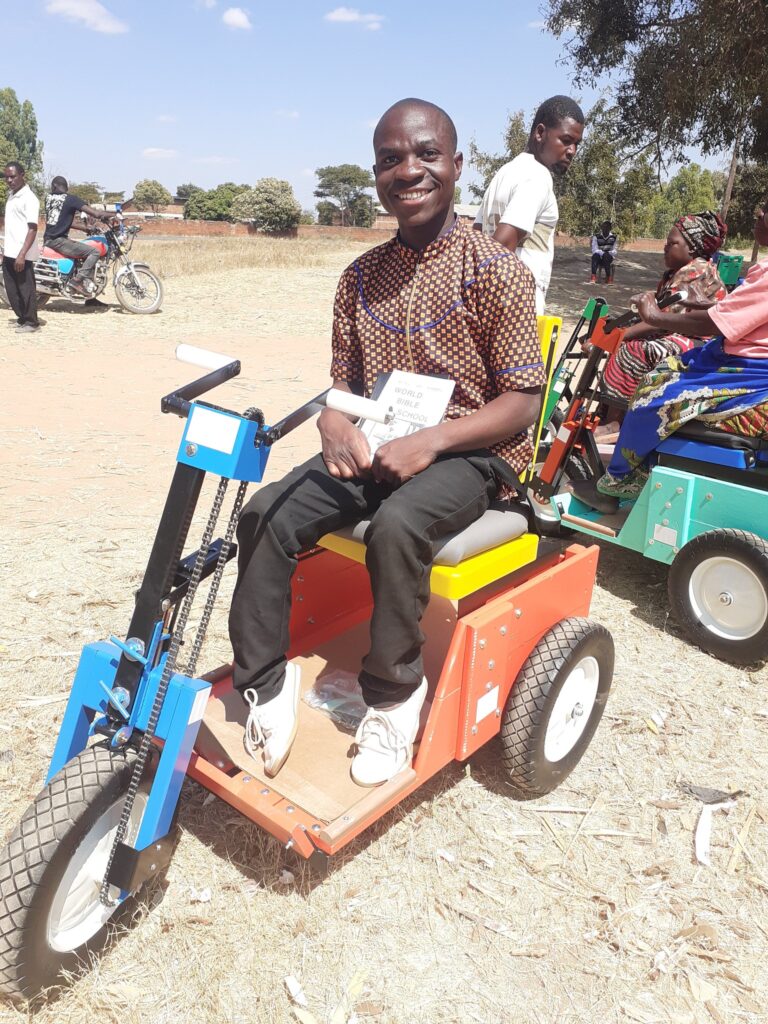
    Then through the assistance of the Free Wheelchair Mission in Irvine, California and the Malawi Project in Indianapolis, Indiana; Afilo was able to receive a wheelchair.

    Even today Afilo cannot speak but his mother is able to speak for him. "Today is a day of deliverance. For the past 17 years I have carried Afilo on my back. I have been looking for this day to come to my life. God indeed has heard my crying and prayers. I will now be able to do work at home, and support my son and my other children."

* The Dedza District of Malawi is the district or state just south of the capital of Lilongwe. It straddles the main highway through the nation, highway M-1 and is the home of the famous cave drawings that date back into the 1500’s. Its population in 2001 was 526,874. In 2008 the population is estimated to be 669,511. Like most of the countryside of Malawi there are almost no paved roads, no electricity, no telephones, scarce healthcare, and a struggling educational system. With an income of little more than $100.00 a year the population of the countryside can offer little help to the federal government in the way of tax revenue, and thus the federal government is helpless to be able to assist the village people in their basic needs. Although a federal governmental system is in place much of the governance of the village areas is still in the hands of the ancient tribal system of government.

Wheelchairs Stand at Attention

Malawi Healthcare, Wheelchairs, Medical, Medical Shipments & Distribution

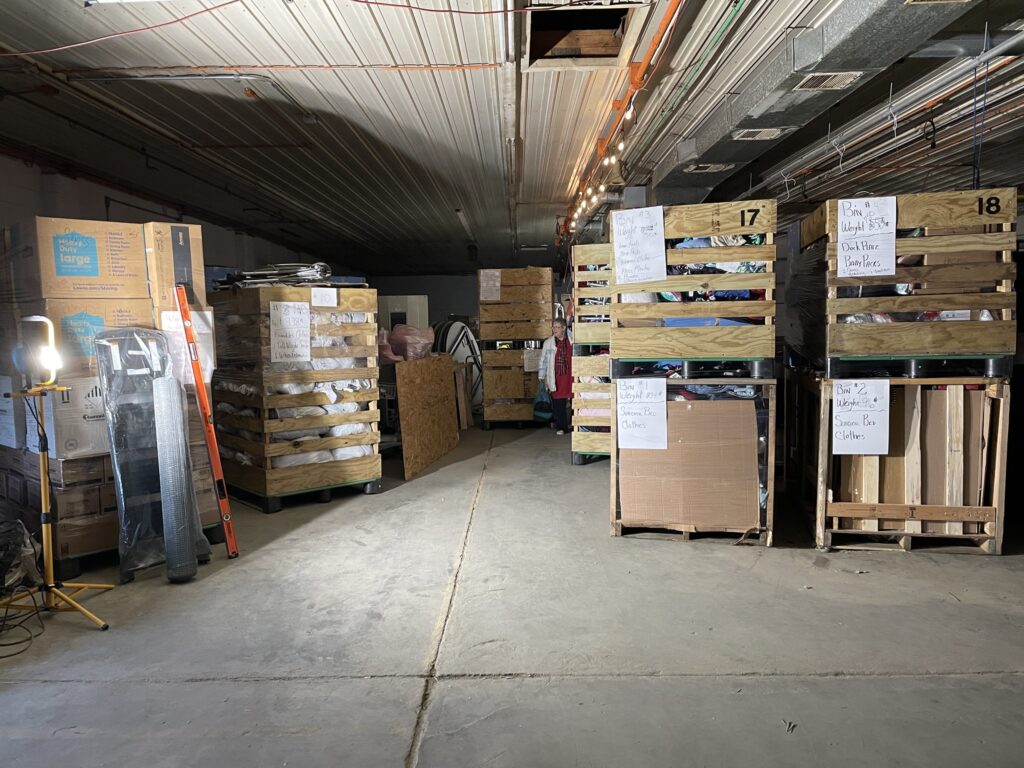
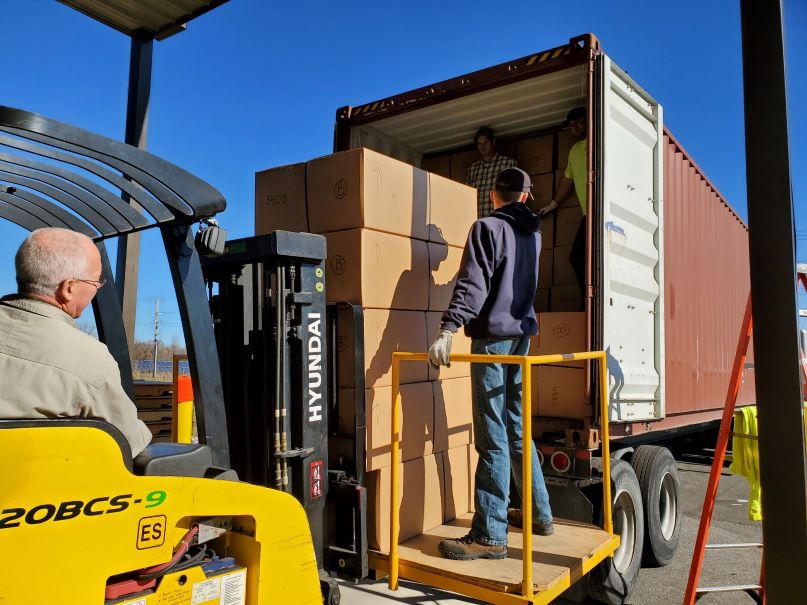
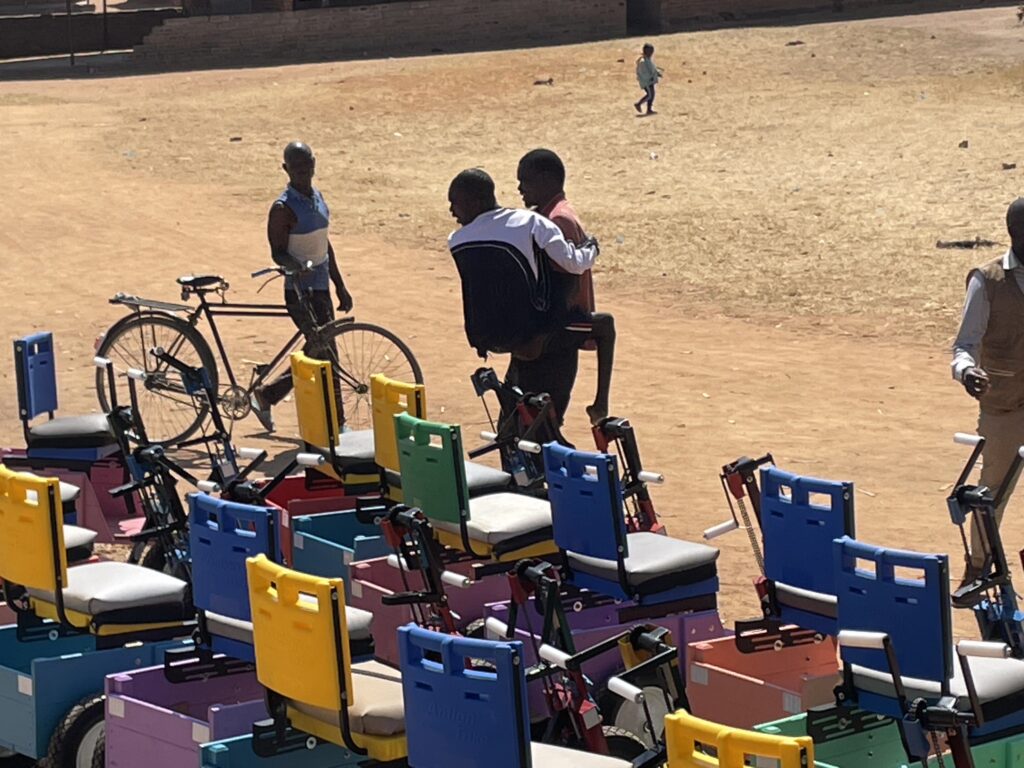
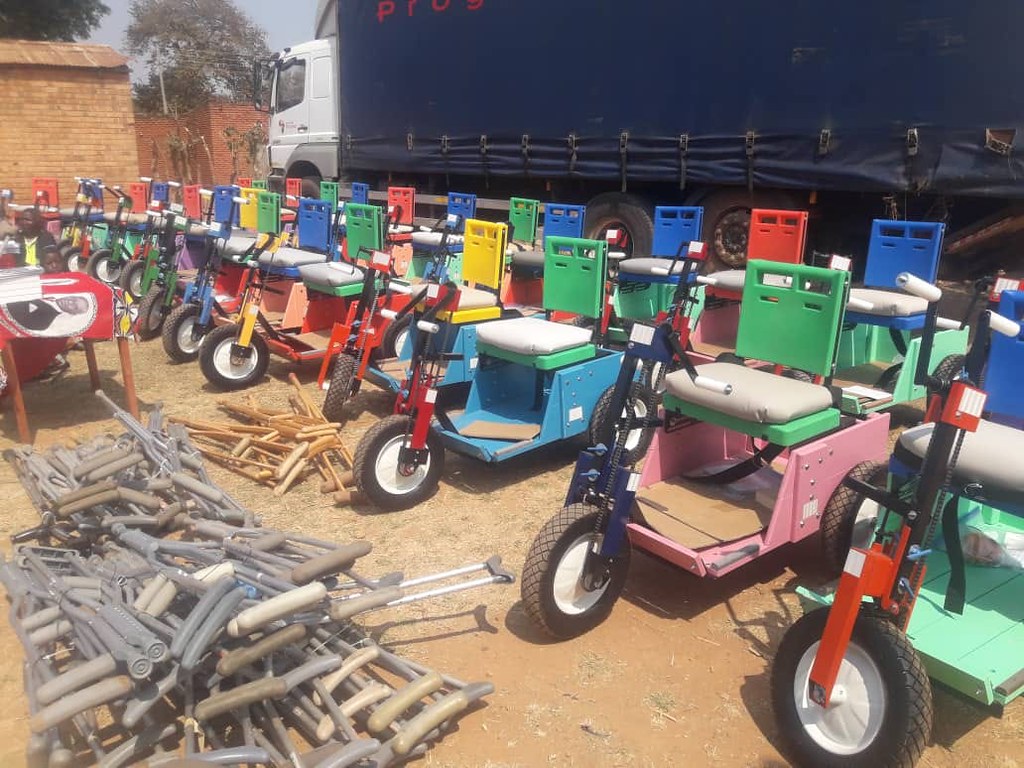
     Indianapolis, Indiana … As the Director for the Malawi Project prepares to take the picture Richard Stephens sights into the camera lens and notes how it appeares "the wheelchairs look like they are standing at attention." He and the Medical Director for the Malawi Project, Suzi Stephens are making an appraisal of supplies that will soon be making their way to the Kachere Orthopedic Rehabilitation Hospital in Blantyre, Malawi. Among the supplies that will fill a 40-foot semi trailer are a large number of wheelchairs that are sorely needed in Malawi, the third poorest nation on earth.

    Stephens notes, "This shipment will be the second shipment to Kachere in the past three months. The orthopedic hospital is in turn are making some of the supplies available to Queen Elizabeth Hospital, the largest in the southern region of Malawi, the Bangwe Weaving Factory, a companion facility that is assisting the handicapped and also in Blantyre, and the Naminkango Maternity Hospital in Thondwe, a small trading center just east of the commercial center of Blantyre." Stephens concludes, "We are pleased with the new relationship that is developing between the Malawi Project and the medical facilities in the area around Blantyre. It is fitting very well into our plans that are designed to expand aid throughout the nation of Malawi. We owe a note of appreciation to Mama Cecelia Kadzamira who has helped to bring these contacts into a working relationship to the benefit of the people of Malawi."

Run Over Like A Pitiful Animal

Wheelchairs, Medical Shipments & Distribution, Be The Change, About Malawi

Car Could Not Stop as Mavuto Crossed the Road

    Mavuto Chifumbi lives in Makwani Village in the area of Traditional Tribal Authority Chief Mponela in the Dowa District of central Malawi, Africa. He is not sure about his age, but is probably in his early fifties.

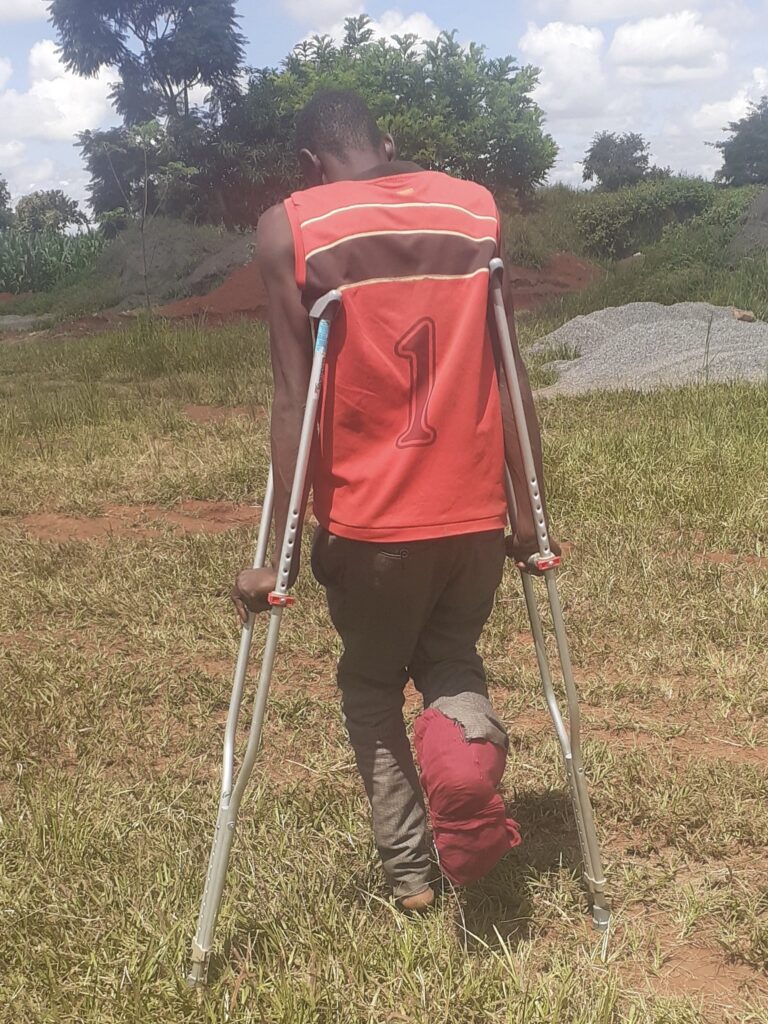
    Mavuto was born with both legs, and was able to walk until 1972. On the dreadful morning of 18th April 1972, Mavuto was crossing the road at the Mponela Trading Centre. A speeding car was approaching from the north. Unfortunately for Mavuto as he was trying to cross the road he stumbled and fell to the ground on the highway. The driver could not stop and he ran over Mavuto’s legs. From this accident he lost the use of both of his legs. From that moment onward Mavuto was destined to crawl on the ground like some sort of pitiful animal.

    At home Mavuto has a wife and five children. Two girls and three boys must help their father everywhere he goes. But today Mavuto it is different for him after his trip to Blessings Hospital. He smiles as he says,

"Today is a relief day in my life. For the past world I have been crawling like this." Mavuto demonstrates by crawling towards the wheelchair. "I wish to inform the world that today I will stop crawling and will use this wheelchair. God is the only one who can understand my happiness that is inside me. I know it is very difficult for people to know, for they cannot see my happiness that is inside me. This wheelchair will support my family and me, I will now be able to move freely without someone taking me on his or her back when either going to Church or to the market. May God bless all the people that put their money together to get this wheelchair for me. I have a small business. I am a cobbler. I do fix people’s shoes, and I will use this wheelchair when going to the market to assist the people in my community."

 Editors Note: the Malawi Project is currenlty making plans to work with the Free Wheelchair Mission to send another shipment of over 500 wheechairs to Malawi in 2008.

Along the Road the Children Played

Malawi Healthcare, Wheelchairs, Medical, Medical Shipments & Distribution, Be The Change

A Single Exception Caught the Attention of George Banda

The road from Lilongwe north to Kasunga is a good tarmac road. In fact it is the main road north through the tiny nation of Malawi, and the only one that is paved the entire length of the nation. Thus it carries most of the heavy truck traffic and most of the bus and walking traffic that can be seen in the northern half of the nation. This means it is not unusual to see perhaps hundreds of people walking along the roadside as one travels this major highway. It was not unusual to see many people walking along the edges of the roadway on that Tuesday in February as I traveled north from the capital. I was on the way to Kasungu District to deliver a number of wheelchairs from our offices at the Kuthadiza Disability Outreach Program offices in Salima. As always I saw old and young, people in oxcarts, others on bicycles, and always I saw many children going to school or playing along the way.

    On this day I was attracted to a small group of children near Madisi as my eyes stopped on a small boy pushing a dirty wheelchair. I pulled to the side of the road to talk to the children. I learned that the boy’s name is Fatsani Zawanje, and he is 8 years old. I learned that he was pushing the wheelchairs because one of the wheels was flat. He lived nearby so I went to talk with his mother since he was not in school, yet the school was only 2 km away. We then took the wheelchair for repairs.

    I am pleased to report the boy is now back in school at the Maranatha PVT Primary School nearby. The parents of the boy are very poor farmers. I encouraged them to follow the example my mother followed by taking me to school every day. It will now be easier for them to take young Fatsoni to school as he again has a wheelchair to help to get him to school and back.

    As I drove away from seeing Fatsoni’s smile I was reminded of Zachaus in the Bible. Along the roadside he gained great benefits from meeting the Messiah. Today along the roadside young Fatsoni has gained from a traveler who could stop and help him.
                                                                                                                                                                                                               By George Banda

*    Editors Note: The wheelchair that George Banda stopped to repair had actually been one of 1,100 wheelchairs that had been delivered and distributed to Malawi in 2006 in a cooperative program between the Free Wheelchair Mission and the Malawi Project.

I Saw No Hope For My Son

Malawi Healthcare, Wheelchairs, Medical, Be The Change, About Malawi

I Would Die and He Would Be Helpless

Name:                         James Jonna
Age:                             12 years
Sex:                             Male
School Class             4
Village:                        Kapire *
Tribal Authority:         Nsamala, Balaka *

    At the age of 2 James fell ill from some sort of illness. His parents were and continue to be peasant farmers and they were unable to afford to take him to the hospital. His condition continued to worsen. Today he can no longer walk.
    Because of his disability James has few dreams for his future, but his farther still dreams of him being able to attend a school for those who cannot afford the regular schools, and of him learning how to look after himself. His father looks toward the end of his own life and fears what will happen to his son after he is gone.
    With the help of the wheelchair there is a much greater chance that young James can get around, learn, and become more independent. His father can now rest much easier at night knowing there is some kind of hope down the road for his son.
    The Wheelchair was given to James and his family by George Banda and his staff at the Kuthandiza Osayenda Disability Outreach in Salima, Malawi. The wheelchair was possible by contributions from the Free Wheelchair Mission in Irvine, California and the Malawi Project.

* Balaka is an African trading center in the southern district of Malawi. It sits along the paved road from Blantyre to Lilongwe and is the commercial center for the district. The population for the Balaka district in 2001 was 270,441 and is it is estimated that in 2008 it will reach 335,449. The tiny villages that mark the countryside around the trading center are still the ancient mud-hut thatched roof villages of long ago. These villages contain no electricity, running water, telephone service and no paved roads by which they can be reached.
* The nation of Malawi is one of the poorest in the world and its heath care and educational systems are struggling to keep up with the increase in population. The HIV/AIDS scourge appears to have leveled of with about 15% of the population of the nation inflected with the disease.
* For a small boy like James there is little hope for any type of future unless he has some way to get around and fend for himself when his parents are gone. With a life expectancy that is now down to 37 years of age the life span of his parents can very well leave James an orphan in the very near future.