
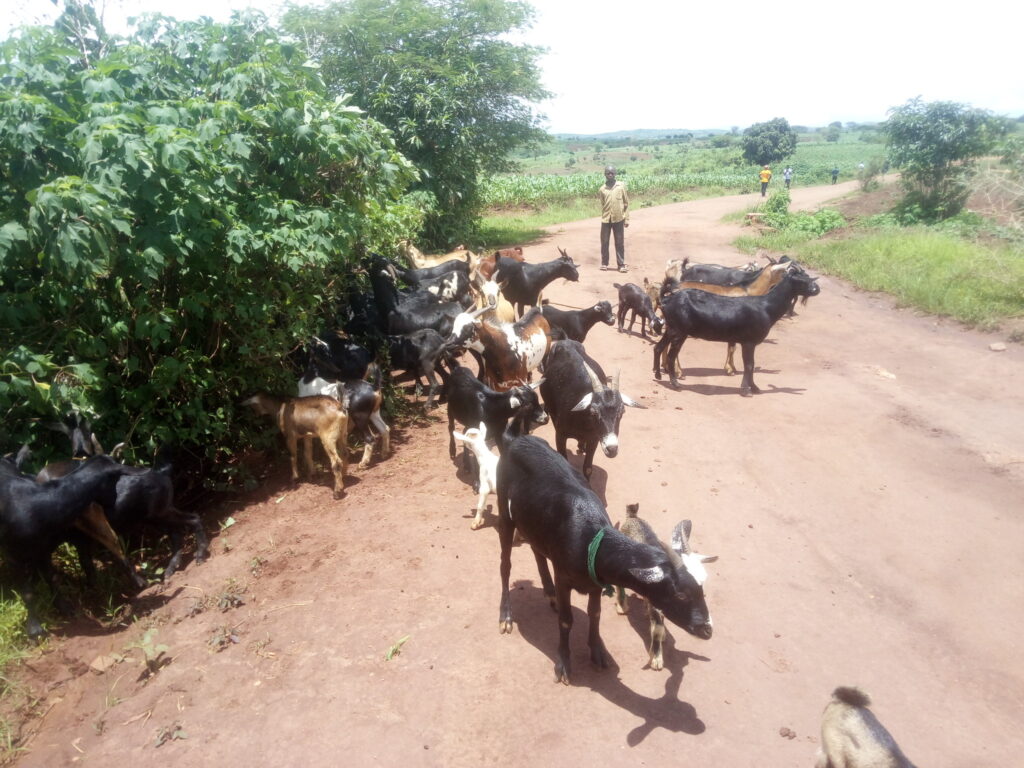
It seems like a picture-perfect rural scene. As the sun peeks over the eastern horizon, adults head to the fields with their hand hoes, and kids lead cattle, sheep, or goats to the rivers or grassy patches for them to graze. It can be a daily grind, and everyone’s working hard to bring food home for their families.
In many places, village children don’t get to go to school. Instead, they’re seen day after day taking care of their uncles’ or parents’ animals. Sadly, too many are forced to work on the farm while their friends are in school.
Wilson Tembo, Director for Action for Progress, wonders as he looks out over the countryside, “Is this the way to raise children when education is denied them, but tending the animals is encouraged? Are they missing out on an education that would make them more productive for their families and communities?” He continues, “During a recent trip to Dowa district for a tree planting exercise, we saw children aged 10-14 caring for cattle and goats. It was early in the morning, around 9 or 10, and a weekday. These kids, so young, were supposed to be in school, but they were out in the bush. When I asked one boy why he was taking care of goats instead of going to school, he said, ‘I really want to go to school, but I don’t have the basics like clothes and books. So, I don’t have anywhere to get them, which is why I do this. It’s not like my friends and I are happy doing this while our friends are in school, but we don’t have anyone to help us.’ This really struck me because I had thought these kids were enjoying what they were doing, but I learned they didn’t have help. It was so sad. I’ve come to realize that when we visit rural areas, we should know that not everything people in rural areas are doing is easy or enjoyable. Sometimes, they have no choice but to do things they don’t like. It is called survival.”