
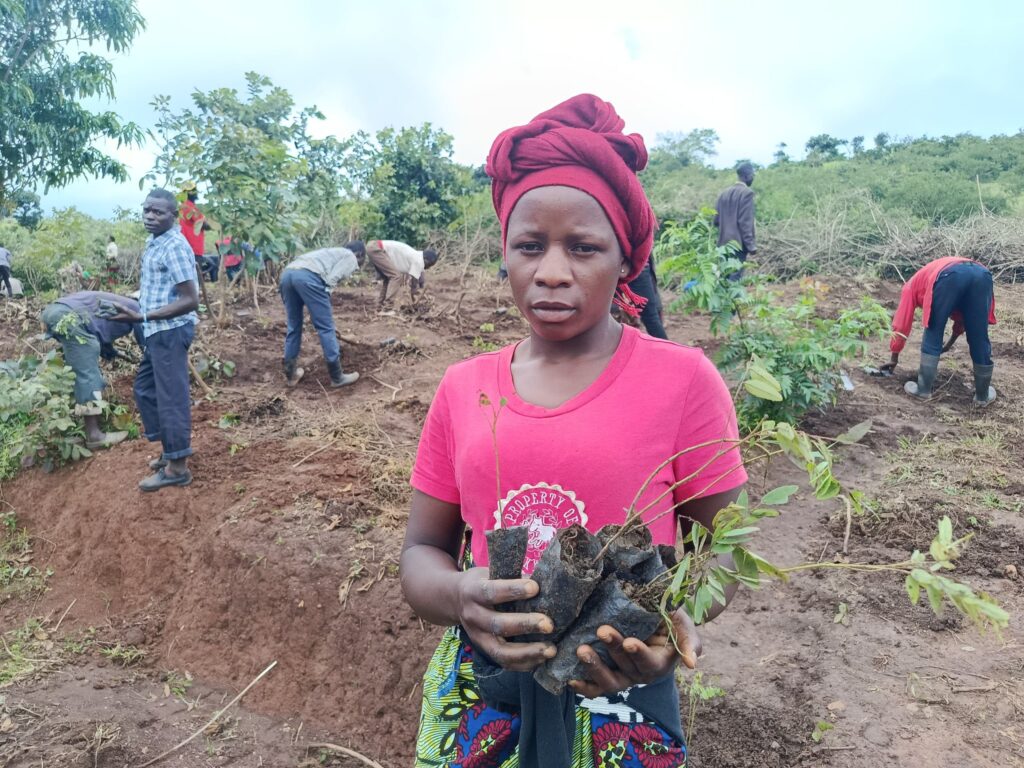
7,200 trees planted in a day
The world has been clearing approximately 10 million hectares of forests annually to make way for agricultural expansion, livestock rearing, urban development, and the production of materials such as paper. This contributes to about 16% of the global deforestation rate. Notably, 96% of deforestation occurs in tropical forests, as reported by Earth.org.
According to the Food and Agriculture Organization (FAO), Africa has lost 29.6 million hectares of forest over the past decade. The United Nations has projected a decline in the continent’s forest area from 699.2 million hectares in 2015 to 662.2 million hectares in 2025, (Africa Agribusiness news).
Online data indicates that Malawi continues to experience significant deforestation, with estimates suggesting that over 250,000 hectares (approximately 617,000 acres) of forest cover were lost between 2001 and 2023. Recent data reveals an annual loss rate of approximately 42,000 hectares (over 100,000 acres). Major factors contributing to deforestation include the expansion of agricultural land, logging, and infrastructure development. Consequently, climate change has undergone a significant transformation in recent years, resulting in devastating consequences such as floods and human casualties.
As the global population continues to grow, the demand for resources increases proportionally. Individuals engage in indiscriminate tree cutting solely for firewood, burning charcoal for livelihood, and neglecting the replanting of trees. This has led to land degradation, adversely affecting crop yields in agricultural fields. The climate has undergone irreversible changes.
In 2026 alone, the Malawi government plans to plant a total of 41 million trees. This initiative is not unprecedented. Annually, the government leads tree planting exercises that garner widespread public participation. It is imperative that individuals of all ages, genders, and backgrounds, regardless of their affiliation with the state or non-state sectors, assume the responsibility of replanting trees.
In response to the pressing need for environmental conservation, Action for Progress through the Department of Forestry implemented a strategic initiative to promote sustainable practices. The organization commenced a tree planting exercise at Mponda Primary School in Dowa District, employing the “Tree for Shoes” program. This program was started by the Malawi Project in the late 1990’s and it aims to enhance forest cover and mitigate climate-related challenges.
On the day of the event, approximately 7,200 trees were successfully planted. The ceremony was presided over by the District Environmental Officer. Attendees included the Board Member of Action for Progress, Madalitso Mwandoloma, the District Forestry Officer, the Executive Director of Action for Progress, Senior Group Village Headmen, and their respective subjects.
During the event, the Forestry Officer demonstrated the proper techniques for tree planting and emphasized the importance of community members providing adequate care for the newly planted trees until they reach maturity. According to the organization’s Director, Wilson Tembo, “providing shoes to farmers after they have planted trees serves as a tangible motivation, highlighting the significance of environmental stewardship.” In her remarks, the Board Member of the Trustees of Action for Progress underscored the divine mandate for individuals to prioritize environmental conservation.
Following the successful tree planting initiative of the previous year, Action for Progress has undertaken a renewed commitment to its environmental conservation efforts. Approximately 2,000 individuals participated in the tree planting activity, resulting in the successful planting of 7,200 trees. The tangible impact of this endeavor is evident as the ground is now covered with growing tree seedlings.
The Shoes for Trees program was instituted by the Malawi Project in the early 2000’s and is made possible by individual contributors, and major shoe donations from Walmart Corporation. Action for Progress is the Malawi sister organization to the Malawi Project and the two work together to source aid from the U.S. and supply assistance to the people of Malawi.
Picture: One of the villagers holds a number of tree seedlings while others in the distance are planting the new seedlings.