If She Were My Child

if_she_were_mine“What if this were my daughter,” I wondered to myself as I studied the face and features of this small, malnourished child in southern Malawi?

“Pictures come in from all over Malawi day after day, but this one captured my attention,” recalls Richard (Dick) Stephens of the Malawi Project. “While I am extremely pleased with the shipments of medicine Kristy (World Emergency Relief), and Shirley (Universal Aide Society), have made possible, because I know that most recent shipment very well may have saved this little girl’s life, I can’t help wondering how many other children are in the same condition. Obviously if medicine and nourishing food had not been made available … well, I just don’t want to think about it.

“The question lodges in my heart beside the picture of this sick, malnourished, child, ‘What if this were my child or your child?’ I am sure both of us would move heaven and earth in an attempt to help her.”

New VT2 Farm Tractor Leaving for Malawi

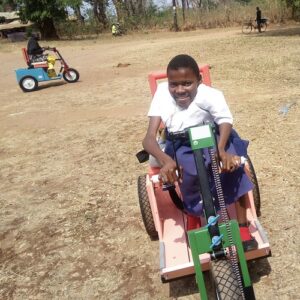
VT-2The success of the V-Tractor in Malawi has been undisputed and welcomed by local farm villages. Innovative and resourceful groups have introduced new uses for the units on site, and the ability to increase crop production is undeniable. From hauling sand to helping a soccer team develop community responsibility, from field cultivation to clutter removal on the beaches of Lake Malawi, the V has proven itself over and over.

Now, a new generation of V-Tractor is being introduced, the V-T2, a walk behind unit that has many of the same characteristics as the V-Tractor, but designed in the tradition and versatility of an industrial size rototiller. This unit, as with its older and larger cousin, has been manufactured with characteristics that make it both valuable and appropriate for conditions in the developing world.

Specifications:
Engine: 6-8 hp gas or diesel. Pull start
Transmission: Cut gear with differential lock. 3 speed forward. 1 reverse.
Wheels: 36” diameter with 4” cleats. (chain drive to wheels)
Weight: 540 lbs.
Speed: Gear 1=1.5 mph. Gear 2=3.5 mph. Gear 3=6 mph. Reverse – 1.5 mph
Attachments: 3-row shovel from 2” to 4” shovel width.
1 row planter (under development)
Cart (under development)

The first group of units have been manufactured and assigned to South Sudan (2-units), Malawi (2-units), Haiti (1-unit), and Costa Rica (1-unit).

For more information about the new VT2 tractor contact Tom Rich at Agricultural Aid International  (877.482.2040 – Trich@z-spray.com).  Videos to come… this is a very exciting project that we want you to be aware of.

Burned Girl at the Gate

Senga Bay, Malawi … “Madam, please come quickly. Little Maria from down the road is in bad trouble. Come. Come.”

“I rush to the gate and there is little Maria being held in her mother’s arms. She looks very brave, though a bit pensive. Her father explains in broken English that she has been burned on her back and leg with hot porridge. His asks for help, explaining that she is neither crying nor is she eating Burned Child In Malawi receives treatmentfood or doing anything. Then they turn her around. The skin is bubbled up where she has been burned, and peeling off. Under what had been brown is now pink white and peeling. This can be very serious, as these people do not have the resources to get their daughter to another health care facility.”

Describing the situation is Samantha Ludick, the owner of the Cool Runnings Lake Resort in Senga Bay.  She has been called to the gate of the resort, as this is the place village people come for basic health care during times of emergency. It is called Clinic at the Gate, sponsored by the Malawi Project and it is the hope for healthcare in an emergency for many people. For little Maria this is a serious emergency. Ludick continues her narrative.

“I don’t know what we would do without the medical supplies we received.  It is the same over and over. There is almost always a shortage but, even when the medical facilities have supplies, the poor people in our area have no way to get to the hospital. Children like Maria get infections and die, when it would have been so easy to put burn ointment on it, bandage it, and it would heal in a few days. This little girl is very fortunate.”

“As I give Maria a pain killer, before attending to her burns, I explain to her father and mother that she will have to come every day so I can change the dressings. Maria will be fine in a week or so as long as they follow our instructions, and keep the bandages dry and clean. They must not carry her on mums back as this will make the bandage on her knee move and it will cause her pain. During the entire procedure Maria was brave and did not cry out, not even one peep. Then when we were finished her eyes light up when we gave her a lollypop for being such a brave girl. Dad, a Gogo (grandmother) and her mum couldn’t stop saying THANK YOU & promising they will take care to give her the medicine as instructed, keep her dry, and will bring her back tomorrow morning.”

Brownie Troop Takes Thinking to Doing

Huntersville, North Carolina is a long way from Thondwe, Malawi, but the girls of Brownie Troop 2525 in Huntersville have bridged the gap of knowledge, and turned what they have learned into action. Each year Girl Scouts of America does a project for “National World Thinking Day.” This year five nations were offered. Lonnie Serdinsky, one of the Girl Scout leaders for Troop 2525 picks up the story.

“Since Malawi was one of the countries we could study I went to the Malawi Project web site. After looking at the wealth of information available on the site, I wrote and received literature that gave us additional insight. I became so enamored with the children of Malawi that I decided Malawi would be the perfect project for our Brownie Troop.”

“At our first meeting we printed pictures from the web site, and told the girls stories about them. We showed them huts, and the girls were amazed. They could not believe what they were seeing. We then discussed washing clothes, and they looked at a small boy washing clothes in a blue plastic bucket. We showed a hospital, describing the condition of health care. They were especially amazed at seeing children excitedly holding up pencils that had been donated to them, and with the fact the children there walk miles in order to gain an education. After each question we asked what they thought the people needed. We wrote down their answers; pencils, band aids, clothing, notebooks, shoes, soap, toys and even a car.”

Brownie Troop World Thinking Day Lonnie continues, as she describes their next step, “During our study of Malawi I set up a mock village, taping off the space for a village hut. All 8 of our girls sat in this space to learn what it would be like to live in such a small space. The girls were all given Chitenje’s I had made for them. They collected firewood (twigs), washed clothes in a plastic bucket, went to the market for potatoes they carried on their heads, swept the hut, and ground maize using a wooden mortar and pestle. They tasted the porridge we made from ears of corn donated by a local farm store. Later we danced around in a circle to a Malawi dance for girls we had downloaded from iTunes. Then we asked parents to contact the school where their daughters attend, and get permission for them to bring a poster about the Malawi project. The girls decorated the posters with drawings of things they needed to collect. They asked their classmates to help. It was a great opportunity for them to feel comfortable presenting their ideas to their classmates.”

Lonnie concludes, “It all helped the girls understand how lucky they are to live in this country, and how wonderful it is to help others who are in desperate need. They were very proud of the things they gathered to send to help in Malawi.”

Little Girls Clothing Little Girls

Victor Hugo (February 26, 1802 – May 22, 1885) considered the most influential French Romantic writer of the 19th century once said there is nothing stronger than an idea whose time has come. This seems true when it comes to the realization that little girls in emerging nations are at the bottom of the list to receive gifts. Clothes, shoes, and other gifts go to the rest of the family first. However, this is changing thanks to a number of groups in the U.S. and other first world nations. Like tulips Making Dresses for girls in Malawibursting into bloom on a warm spring day, groups of women and girls have set out to make and ship dresses for little girls. The gifts are not only needed to clothe them but these new dresses are linked to a definite increase in self worth and personal value. With a brand new dress comes the realization that someone cares about them as a person, and this fact is a great step forward in their sense of self and about their self-development.

A number of little girls in Klamath Falls, Oregon started making dresses in order to “Make a Difference”. This brought into being “Sew’n Hope”, a program now sponsored by the Nile Street Making DressesChurch of Christ in Klamath Falls, Oregon. Dresses are being sent to Malawi in shipments by way of the Malawi Project. Village of Hope in Ghana, Namwanga Mission in Zambia, and Sanyu Foundation in Uganda are also receiving these dresses.

Two other groups assisting the Project with dresses for little girls are, Little Dresses for Africa, Rachel O’Neill, www.littledressesforafrica.org, as well as a group of church women in Portland, Oregon coordinated by Ida Partlow, and the Oak Hill church in Evansville, Indiana.